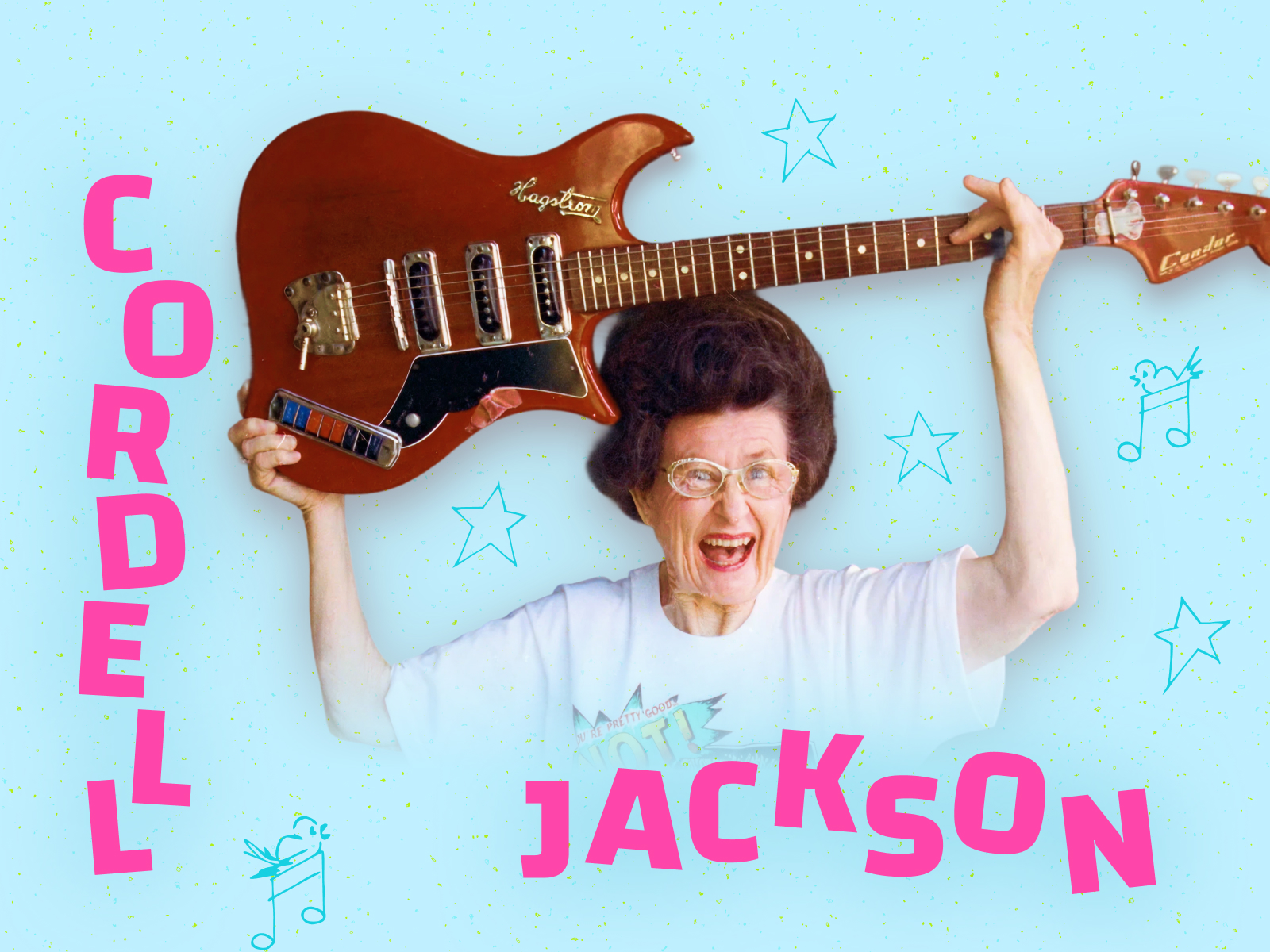
A true trailblazer in the male-dominated music industry of the mid-20th century, carving out a unique legacy in rockabilly and rock ‘n’ roll with her raw, energetic guitar style and unapologetic approach to music. Her contributions, though often overlooked in mainstream music history, have left an indelible mark on the genre, with her work celebrated in institutions like the Rock and Roll Hall of Fame and the Smithsonian-developed Memphis Rock ‘n’ Soul exhibition here in Memphis.
Long before she was appropriately labeled “The Rock ‘n’ Roll Granny” later in her rich career, this guitarist, songwriter, producer and engineer became widely recognized as the first woman to write, produce, engineer, arrange and promote music on her own rock and roll record label, Moon Records.
Cordell Miller was born on July 15, 1923, in Pontotoc, Mississippi, a small town once known as a hideout for Jesse James’s gang in the 19th century. Her father was a violinist and led a string band called the Pontotoc Ridge Runners, which introduced young Cordell to music. Raised in a musical household, she began learning instruments at a young age, mastering the guitar, piano, harmonica, double bass, mandolin, and banjo by her teens. By age 12, she was performing with her father’s band and on local radio in Tupelo, Mississippi. Jackson recalled in a 1991 interview with the Christian Science Monitor:

When I picked up the guitar, I could see it in their eyes: “Little girls don’t play guitar.”
I looked right at ‘em and said, “I do!”
Cordell to Christian Science Monitor in 1991
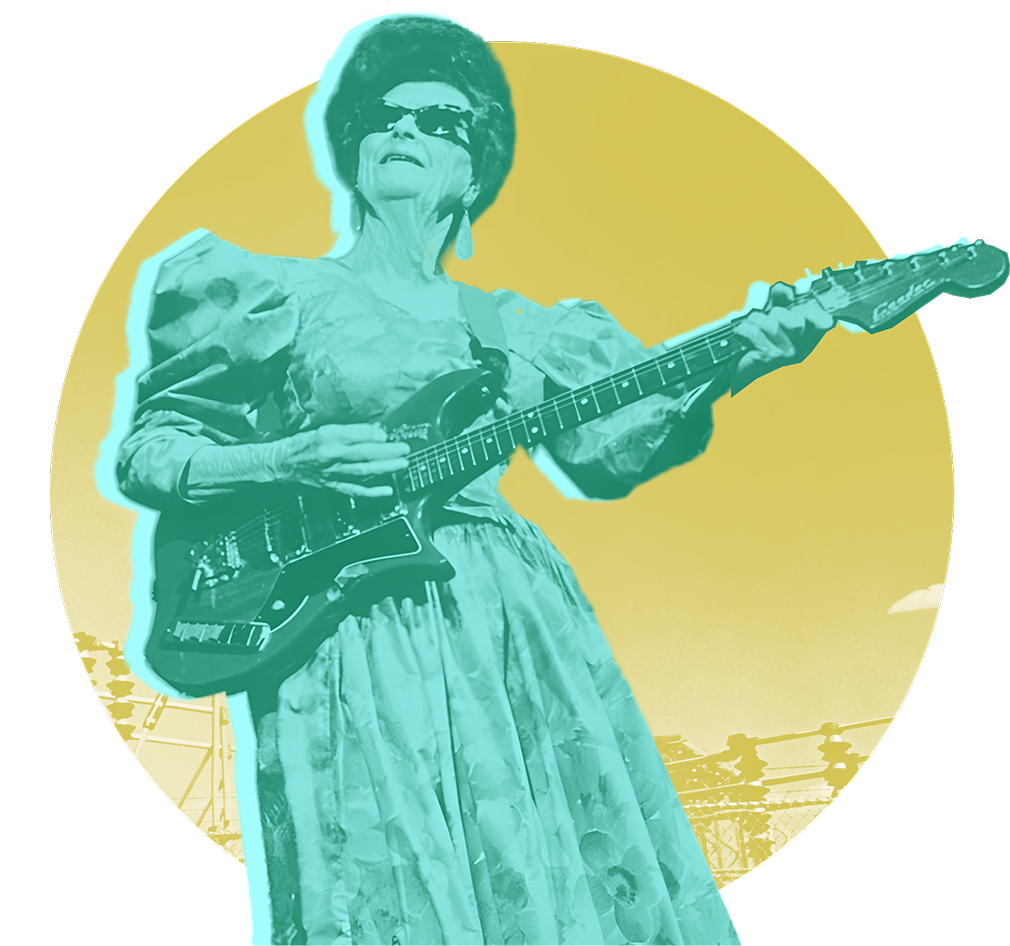
In 1943, at the age of 20, Cordell graduated from high school and married William Jackson. The couple relocated to Memphis, a burgeoning hub for music that would later become synonymous with rock ‘n’ roll.
During World War II, Jackson worked as a riveter and joined the Fisher Air Craft Band, where she played stand-up bass. She also began writing songs during this period, laying the foundation for her future career as a songwriter and performer. By 1946, she had purchased recording equipment for her home. She also worked a variety of jobs, including interior decorator and deejay on the all-female radio station, WHER, while waiting for her music career to take off.
In the late 1940s, Jackson recorded demo records in her home studio, which she sent to friend Sam Phillips, the founder of Sun Records, before he established the iconic label. However, unable to break into Sun’s male-dominated roster, which included artists like Elvis Presley and Johnny Cash, Jackson took matters into her own hands. With encouragement and advice from RCA Records’ Chet Atkins, she founded Moon Records in Memphis in 1956, a play on the name of the more famous Sun Records. She released her first singles, “Beboppers Christmas” and “Rock and Roll Christmas,” on her Moon Records label, serving as the producer, engineer, and arranger – a groundbreaking achievement for a woman in the music industry at the time.
Moon Records became a platform for Jackson to release her own music and that of other local artists, primarily in the rockabilly, rock ‘n’ roll, and country genres. Her home studio in Memphis was a hub of creativity, where she recruited talent from across the Southern United States. Her 1950s recordings, often described as novelty records, were characterized by their high energy and fast-paced, raw guitar work. Songs like “Rock and Roll Christmas” showcased her “spasmodic” style, as she described it, which prioritized passion and intensity over polished perfection. She told the Christian Science Monitor in 1991, “Makin’ mistakes doesn’t bother me at all,” reflecting her fearless approach to performance. Her perseverance in a male-dominated industry allowed her to build Moon Records into a lasting institution, which remained the oldest continuously operating record label in Memphis at the time of her 2004 death.

Jackson’s career saw a revival in the 1980s, spurred by the psychobilly and garage rock revival led by bands like Tav Falco’s Panther Burns and artists like Alex Chilton, who covered her 1950s Moon Records singles, including “Dateless Night.” This renewed interest prompted Jackson to return to performing, often as a solo act with her signature red Hagstrom electric guitar, sometimes backed by bands like the A-Bones. Her performances, marked by ferocious guitar playing and a vibrant stage presence, earned her the nickname “Rock ‘n’ Roll Granny” as she approached her 70s.
In 1983, Jackson released a four-song instrumental EP, Knockin’ at 60, on Moon Records, and in the early 1980s, she issued the oddly titled compilation album, The 50s Rock on the Moon of Memphis, Tennessee + an Oddity, which featured her 1950s singles. The original vinyl singles from this compilation were later displayed at the Rock and Roll Hall of Fame in Cleveland, Ohio, cementing her place in music history. Jackson also pioneered the release of video singles in the 1990s, including “Football Widow” and “The Split,” directed by filmmaker Dan Rose. Her decision to market individual video singles, rather than multi-song collections, was another first in the industry, showcasing her innovation.
Jackson’s visibility grew significantly in the early 1990s. In 1991 and 1992, she appeared on Late Night with David Letterman, captivating audiences with her distinctive style and high-energy performances, often wearing a floor-length ball gown.
In 1991, she starred in a famous Budweiser commercial alongside rockabilly artist Brian Setzer, engaging in an electric guitar duel. In the ad, she taunted Setzer, saying, “You’re pretty good… NOT,” a moment that became iconic. Spin magazine named her a “Guitar God” in 1990, alongside legends like Eric Clapton and Jimmy Page, further affirming her influence. She headlined at famous rock clubs like New York’s CBGB and Maxwell’s in New Jersey, always without rehearsals. She was deeply religious, never cursed, only drank milk and water, avoided airplanes (toured in her yellow Cadillac), and traveled with her own steak, milk, and giant tubs of Memphis water (she didn’t trust any other kind).
Her only solo full-length album, Cordell Jackson – Live in Chicago, was released in 1997. Recorded live on November 16, 1995, at Scubas Nightclub in Chicago, the album featured tracks like “Memphis Moon Rock,” “Hound Dogit Blues,” and “Johnny Cash Train.” Critics noted her style as sitting “somewhere in between Willie Nelson and Jimi Hendrix,” with a sound that prefigured the raw edge of bands like the Velvet Underground.
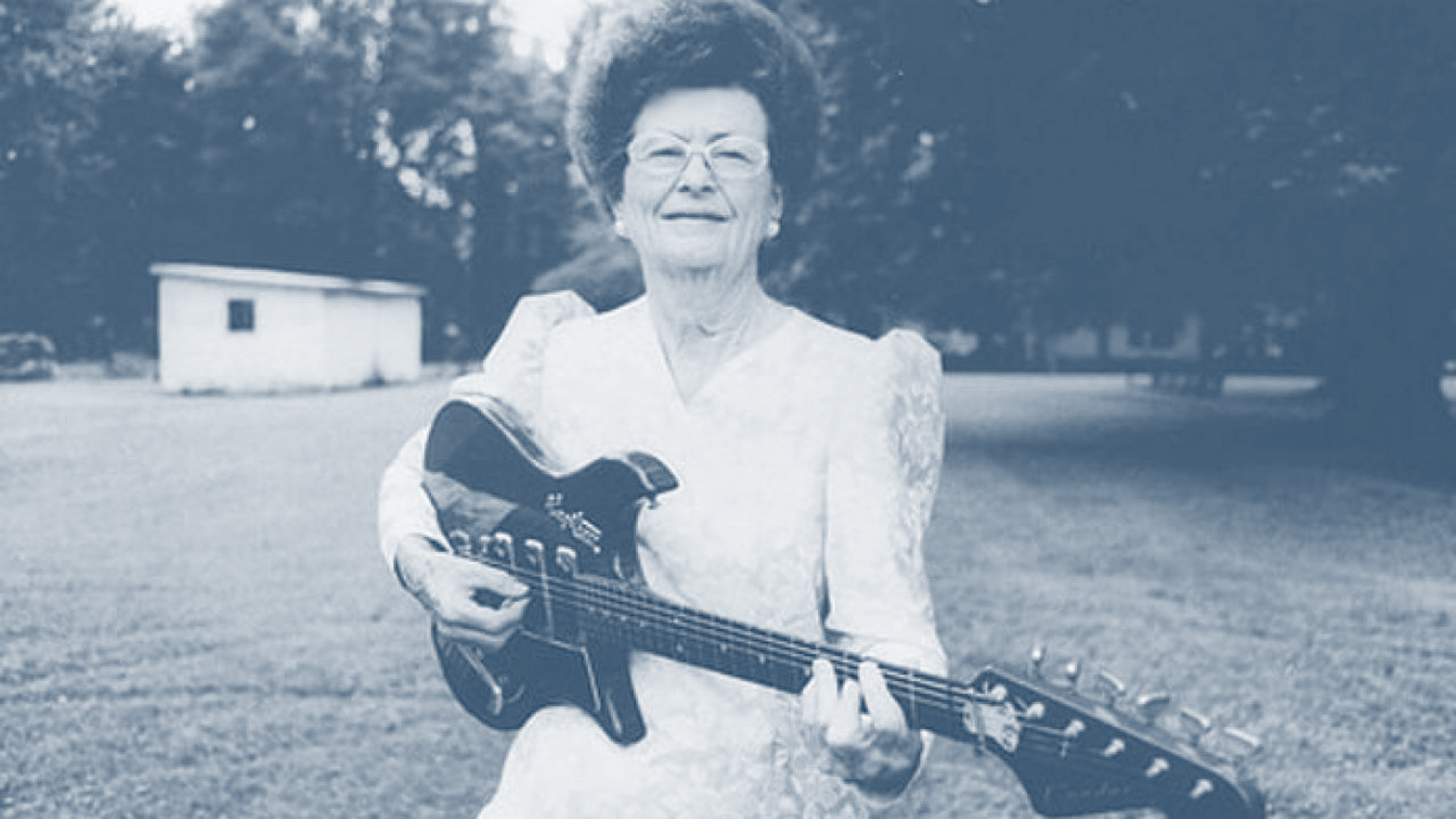
Beyond music, Jackson was a multifaceted creative. She produced a contemporary Christian radio show called “Let’s Keep the Family Together, America.” She also ventured into acting, appearing in films like “The Gun in Betty Lou’s Handbag” (1992), “Goodnight Sweden” (1994), and “Checkmate” (2018, posthumously credited). Additionally, she was an accomplished painter, selling artwork to collectors in London, Japan, Stockholm, and across the U.S. Jackson also contributed a song, “Jazz Fried,” to the film “Wayne County Rambling.”
Jackson was named Memphis Musician of the Year and Memphis Songwriter of the Year, honored by Who’s Who of World Women. Her 1989 music video won an award at the New York Film Festival and was featured on MTV. She was also celebrated in publications like Interview Magazine.
Cordell and William Jackson had one son, Dana, who sometimes performed as her drummer. She lived in a yellow house in Memphis, drove a yellow car, and opened her home for tours each summer. Her philosophy was one of relentless creativity and independence. She described herself as an “inventor” and lived by the mantra, “If I think of it, I do it.” Her approach to music was equally bold: “Rock-and-roll is the happiest music. It gives you life,” she told the Christian Science Monitor. She advised young musicians to “keep the lyrics clean, start early, work hard, and don’t look back.”
Jackson passed away on October 14, 2004, in Memphis at the age of 81. At the time of her death, Moon Records remained a testament to her pioneering spirit, and her music continued to inspire new generations. Her work, though under-recognized during her lifetime, has been rediscovered through platforms like Spotify, Apple Music, and YouTube.
Jackson’s legacy as a female pioneer in rock ‘n’ roll is profound. She defied gender norms, built her own platform in an era when women were rarely given creative control, and left behind a body of work that captures the raw, rebellious spirit of early rockabilly. Her story, as noted in a 2024 New York Times obituary, is one of a forgotten pioneer whose music and persona reside in the “dusty bric-a-brac of our country’s collective unconscious.” Her impact endures in the barriers she broke, proving that, as she said, “one person can make that difference.”
Cordell to Christian Science Monitor

Be the first to add your voice.